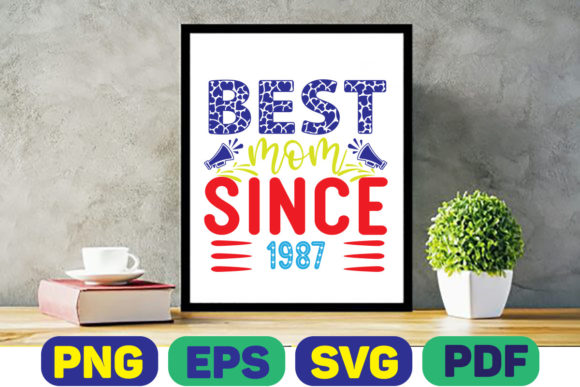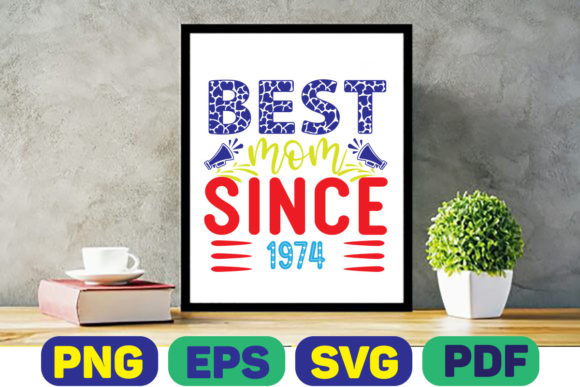
Reviewing Best Mom Since 1974 for Real Embroidery Projects
As a designer who spends more time staring at stitch simulations than I care to admit, I approach every new machine embroidery design with a mix of curiosity and caution. We have all seen the trends come and go in the world of Crafts and digital assets. Today, I am taking a close look at Best Mom Since 1974, a piece of Graphics content that promises nostalgia and warmth. The question is not just whether it looks good on a screen, but how it holds up when the needle hits the fabric.
The first impression of this design is one of understated charm. It does not scream for attention with overly complex flourishes or dense, heavy fills. Instead, it relies on clean lines and a balanced layout that suggests a vintage aesthetic without feeling dated. For those of us running a craft business or selling as an Etsy seller, this balance is crucial. A design that is too busy can look cheap when stitched out, while something too simple might fail to justify the price point of a handmade product. This design sits comfortably in the middle, offering enough visual weight to be noticeable but remaining airy enough to stitch quickly and cleanly.
Visualizing the Stitch-Out: From Screen to Fabric
I recently considered using this file for a custom order involving a canvas tote bag design. The client wanted something that felt personal but not overly sentimental. Best Mom Since 1974 fit the brief perfectly. When evaluating any digital embroidery file, I always think about the final texture. Will the satin stitch edges lay flat? Is the fill stitch density appropriate for the material?
In this case, the design appears to use a combination of techniques that work well together. The lettering likely utilizes a tight satin or column stitch, which provides crisp definition against the background. If you are planning to use this on a sweatshirt embroidery project, the texture of the fleece or cotton blend will interact nicely with the smooth thread. However, you must be mindful of the stitch density. If the design is too dense for a lightweight fabric, it will pucker. If it is too sparse on a heavy towel, it may look insubstantial.
For a personalized gift like a kitchen towel or apron, this design shines. The year "1974" adds a specific narrative element. It transforms a generic compliment into a story. This is what drives buyer engagement in commercial embroidery. Customers are not just buying a logo; they are buying a connection. Whether it is for a birthday, Mother’s Day, or a holiday embroidery gift, the specificity of the date makes the finished product feel bespoke.
Navigating Technical Challenges and Fabric Choices
While the design is versatile, it is not without its technical demands. As an experienced reviewer, I must point out where caution is needed. If you are applying this to curved surfaces, such as a cap or hat, you need to ensure the design fits within your hoop size constraints without distortion. Small hoops can limit your ability to resize the design effectively, potentially making the text too small to read clearly from a distance.
Fabric choice plays a massive role here. On dark fabrics, you will need high-contrast thread colors. A white or cream thread on navy blue works beautifully, but you must ensure your machine tension is perfect to avoid gaps in the lettering. On stretchy fabrics, like those used for baby embroidery on onesies, a proper stabilizer is non-negotiable. Without it, the running stitch outlines or fine details could shift, ruining the clarity of the year and the title.
Another consideration is the level of detail. If this design includes any tiny serifs or intricate connectors between letters, these can become problematic on textured fabrics like terry cloth or wool. In such cases, simplifying the design or choosing a smoother fabric base is wise. Always test the design on scrap fabric first. This is the golden rule of any embroidery project. Check how the threads interact with the fabric texture and adjust your tension accordingly.
Commercial Viability and Brand Consistency
For small shop product lines, consistency is key. Best Mom Since 1974 offers a classic look that can anchor a broader collection of family-themed designs. It pairs well with other vintage-style design assets, allowing you to create cohesive bundles for your online store. When creating printable mockup previews for your listings, ensure you show the design on various backgrounds. A black-and-white mockup can help you verify that the contrast is sufficient even before you stitch a single thread.
From a branding perspective, this type of design builds trust. It shows that you understand timeless aesthetics rather than chasing fleeting trends. For an embroidered patch or a boutique clothing label, this design conveys professionalism. It suggests that the creator cares about legibility and balance. This attention to detail translates directly to customer trust and higher perceived value.
Practical Notes for the Modern Maker
Before you download and start stitching, there are a few housekeeping items to address. The product description mentions it is a digital file for T-shirt designs and SVG formats, but as an embroiderer, you need to confirm the specific embroidery formats included. Does it come in PES, DST, JEF, or other machine-specific formats? Always check the file compatibility with your machine before purchasing.
Additionally, review the licensing terms carefully. The description invites you to buy files for yourself, friends, and family, but if you are an Etsy seller or run a craft business, you need to know if commercial use is permitted. Can you sell finished items made with this design? Can you use it in custom apparel for clients? Clarifying these rights protects your business and ensures you are operating within legal boundaries.
Finally, consider the versatility of the color palette. While the design may look great in traditional reds and pinks, do not be afraid to experiment. Earth tones, pastels, or even monochromatic schemes can give Best Mom Since 1974 a modern twist. Test different thread colors to see what best complements your target market’s taste.
In conclusion, this design is a solid addition to any digital library. It is practical, emotionally resonant, and technically manageable for most intermediate to advanced machines. With proper preparation and attention to fabric and stabilizer choices, it can elevate your handmade product offerings and delight your customers. Just remember to test, tweak, and verify your licenses, and you will be ready to create something truly special.