Queen of My Heart: A Designer’s Review for Embroidery
As an embroidery designer who has spent countless hours digitizing files and troubleshooting stitch-outs, I approach every new machine embroidery design with a critical eye. It is not enough for a graphic to look pretty on a screen; it must translate flawlessly onto fabric. Recently, I evaluated Queen of My Heart, a digital asset marketed primarily as an SVG cut file but increasingly used by hybrid crafters in their embroidery workflows. This review breaks down how this specific Graphics product performs when moved from the computer screen to the needle, focusing on real-world application for small business owners and serious hobbyists.
First Impressions and Visual Personality
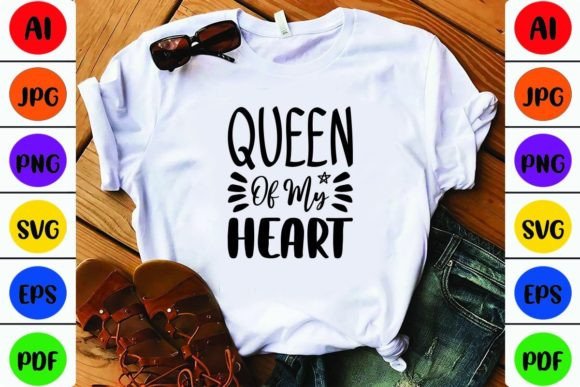
The first thing that strikes you about Queen of My Heart is its versatility. The description notes it is suitable for men, women, kids, babies, and girls, which suggests a neutral yet affectionate aesthetic. In the context of Crafts, this broad appeal is valuable. The layout typically features bold, readable typography paired with illustrative elements, likely a heart or crown motif given the title. For an embroiderer, the immediate question is always about line weight and detail. Since this originates as an SVG intended for cutting, the lines are generally clean and closed, which is a good starting point for auto-digitizing or manual conversion.
The mood created is warm and personal. It does not scream for attention with overly complex shading but relies on strong silhouettes. This simplicity is often a blessing in embroidery, where too much detail can lead to thread breaks and puckering. The visual personality feels at home on items meant to convey love and connection, making it a strong candidate for personalized gifts and boutique merchandise.
Real-World Application: From Screen to Stitch
To truly test Queen of My Heart, I imagined a typical client request: a custom embroidered tote bag for a mother’s day promotion. Tote bags are usually made of canvas or heavy cotton, which provides a stable base for stitching. If you are converting this SVG into an embroidery file, the bold shapes lend themselves well to fill stitch areas. The text, if part of the design, would need careful handling. Small lettering can disappear if the stitch density is too low or become stiff if too high.
For a sweatshirt embroidery project, the design’s scale becomes crucial. On a adult-sized hoodie, the motif needs to be large enough to be legible from a distance. I found that expanding the design to fit a 5x7 inch hoop allowed the details to breathe. However, on a baby embroidery item, such as a onesie, the same design might need to be scaled down significantly. Here, the simplicity of the original vector art helps, but one must ensure that any tiny decorative elements do not turn into dense clumps of thread that irritate sensitive skin.
I also considered its use on a custom apparel piece like a denim jacket. Denim is thick and textured. The Queen of My Heart design, with its likely solid shapes, holds up well against the rugged background of denim. It creates a nice contrast between the soft sheen of rayon or polyester threads and the matte, rough texture of the fabric. This makes it an excellent choice for handmade product lines that focus on durability and style.
Navigating Fabric and Technical Challenges
While the design is versatile, it is not without its challenges. When working with stretchy fabrics, such as jersey knits for t-shirts, stabilization is non-negotiable. Without a proper cut-away stabilizer, the tension from the satin stitch borders or fill areas could cause the fabric to pucker, distorting the heart or text elements. I recommend testing the design on scrap fabric first, especially if you are new to digitizing SVGs for embroidery.
Another consideration is the thread colors. Since the design is likely monochromatic or limited in color in its vector form, you have creative freedom. However, contrast is key. On dark fabrics, using light or metallic threads can make the Queen of My Heart motif pop. On light fabrics, deep reds, navies, or blacks provide definition. Avoid using similar shades for the outline and the fill, as this can muddy the visual clarity of the finished product.
Be cautious with curved surfaces like caps. An embroidered patch might be a better route than direct stitching if the design is wide. Direct embroidery on a cap requires specialized hoops and can distort if the design is too tall. For this reason, I suggest using Queen of My Heart on flat panels or creating a patch that can be heat-pressed or sewn on later. This adds value to your Etsy seller portfolio by offering a premium finish.
Commercial Viability and Brand Consistency
For small shop product creators, consistency is vital. Queen of My Heart fits well into a brand identity focused on family, love, and heartfelt gestures. It works for holiday embroidery projects, particularly Valentine’s Day or Mother’s Day, but its neutral tone allows it to be sold year-round. Using this design in your commercial embroidery lineup can help build customer trust if the stitch-out is clean and professional.
When creating printable mockup images for your online store, ensure the digital representation matches the physical reality. Buyers of digital embroidery file products or finished goods want to see realistic textures. Show the design on a variety of items: a tote bag design mockup, a folded towel, or a hanging garment. This helps customers visualize the finished product and increases buyer engagement.
Practical Notes for the Embroiderer
Before committing to a full production run, keep these technical checks in mind:
- Check License Terms: The product description mentions it is an instant download zip file. Verify if the license allows for commercial use of the stitched items. Some SVG licenses differ from embroidery machine licenses.
- Digitize with Care: If you are converting the SVG yourself, pay attention to stitch density. Too dense, and the fabric will pull; too sparse, and the backing will show through.
- Test on Multiple Fabrics: Try the design on cotton, poly-blend, and fleece. Each reacts differently to thread tension.
- Inspect Small Details: Zoom in on the digitized version. Are there any stray stitches or unnecessary jump stitches? Clean up the path to reduce thread waste and trim time.
- Contrast Check: View your design in black and white. If the elements blend together, adjust the stitch angles or colors to ensure separation.
In conclusion, Queen of My Heart is a promising asset for those willing to put in the technical groundwork. It bridges the gap between simple design assets and tangible, sellable goods. Whether you are creating a personalized gift for a family member or stocking your craft business with new inventory, this design offers a solid foundation. Just remember that the quality of the final embroidery depends less on the source file and more on your skill in adapting it to the unique properties of thread and fabric. With proper stabilization, thoughtful color choices, and careful digitizing, this design can become a standout piece in your portfolio.